Specialist lead flashing installation and replacement across Cheltenham. Chimney flashings, valley re-leads, bay windows and abutments. Code 4 lead minimum on all work. Free surveys, no call-out fee.
Tell us the job in 30 seconds. No pushy sales, no call-out fee.
📞 Call Now: 0124 235 2251Leadwork covers the lead flashings, valleys, soakers and parapet gutters that weatherproof a roof's junctions — and it's where most period Cheltenham roofs actually leak. We re-dress, renew and re-form lead to the correct code, from £200 for a flashing repair. Free quotes, 10-year guarantee. Call 0124 235 2251.
Failed lead flashing is the single most common cause of roof leaks on Cheltenham period properties. We carry out all types of leadwork using Code 4 lead minimum, lime mortar on pre-1920 stock, and patination oil as standard.
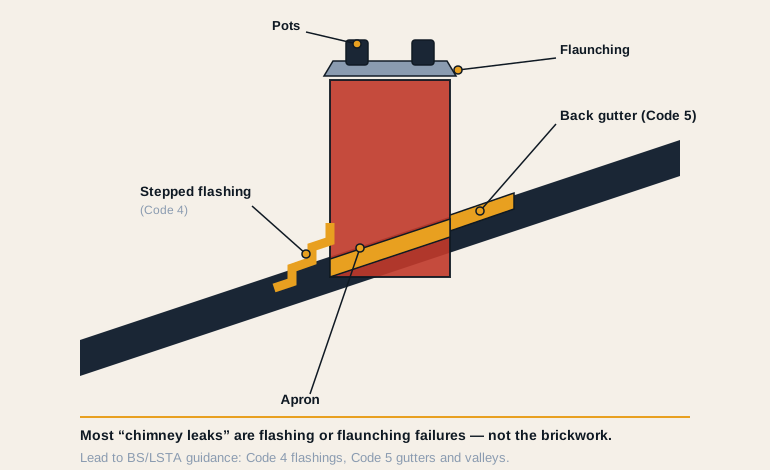
Step flashings, back gutters and soakers on Cheltenham chimney stacks. Code 4 minimum. Lime mortar on pre-1920 properties. From £200 per side.
Get a Quote →Lead valley replacement on period properties. Cut and laced valleys. Heavy gauge lead on all valley work. From £400 per valley.
Get a Quote →Lead apron flashings on bay window roofs — a common leak source on Cheltenham Victorian and Edwardian terraces. From £250.
Get a Quote →Lead at wall abutments, parapet copings and dormer cheeks. Correctly dressed and tucked into raked mortar joints. Conservation area compliant.
Get a Quote →Mortar fillet repairs at the flashing/brick junction. Lime mortar on period properties. Most haunching repairs completed in a single visit from £80.
Get a Quote →Free lead flashing inspection with written condition report. We inspect all flashings, valleys and haunching during every Cheltenham roof survey.
Free Survey →Cheltenham's period housing carries some of the oldest lead flashings in Gloucestershire — and the escarpment climate accelerates their deterioration.
Much of Cheltenham's Regency and Victorian housing has original lead flashings now 60–100 years old. These are well past end of design life. Replacement is the only correct solution.
South-westerly fronts carry more moisture than sheltered inland locations. North-facing chimney stacks see higher thermal cycling, which fatigues lead faster than the UK average.
Pre-1920 Cheltenham properties use lime mortar. Flashings pointed with cement on these buildings pull out as the structure moves, creating the gap that allows water ingress.
Properties in Cheltenham's six conservation areas require appropriate lead specification and lime mortar. We understand these requirements and never substitute on period property work.
Lead is where most period roofs actually leak — Cheltenham's Regency and Victorian roofs are full of it, in valleys, flashings, soakers and parapet gutters. Failed or badly-fitted lead is the hidden cause behind a surprising number of 'mystery' leaks, and because the water often travels along a batten or rafter before it drips, the damp patch indoors rarely sits under the actual fault. Reading where lead has failed, and why, is a specialist skill in its own right.
When it is not the answer: Sound lead that's simply lifted at an edge can be re-dressed rather than renewed — you don't always need new lead, and over-long sheets that were never stepped correctly are the real fault to fix. Read the full guide.
These are guide prices for the most common leadwork jobs in Cheltenham. All include Code 4 lead, correct mortar for the property type, patination oil and a written guarantee. Scaffold is included where required.
Haunching only: £80–200 · Step flashing per side: £200–450 · Full re-lead: £600–1,200
Valley re-lead: £400–800 · Bay window apron: £250–500 · Abutment per metre: £80–150
We check every lead junction — valleys, flashings, soakers, aprons and parapet gutters — and identify whether the fault is failed lead, wrong lead code, or lead that was fitted in over-long sheets that crack.
A fixed price specifying the correct lead code for each detail and the work involved — re-dress, renew, or re-form to proper stepped lengths.
Parapet and valley leadwork usually needs safe access at height; we arrange scaffold or a platform and book the work.
We use the correct code lead for each detail — heavier code 5 and 6 for valleys and gutters, code 4 for flashings — dress it properly over the substrate, step and lap it to shed water, respect the recommended maximum sheet lengths so it can move without cracking, and finish with patination oil to prevent the white run-off staining that mars a fresh lead job.
Access struck, offcuts removed — lead is fully recyclable and we take it away — and each lead detail checked with water for a proper weathertight fall before handover.
| Job | Typical duration |
|---|---|
| Re-dress a lifted flashing | Half a day |
| Renew a chimney or abutment flashing | 1 day |
| Rebuild a lead valley | 1–2 days |
| Parapet or box gutter re-line | 2–4 days |
Lead can be worked in most weather, but we won't leave a roof detail open overnight in heavy rain — each section is made watertight before we finish for the day.
Simple flashing re-dressing can be done from a tower, but valley, parapet and box-gutter leadwork on Cheltenham's terraces usually needs scaffold for safe, quality work. Scaffold is specified for: valley, parapet and box-gutter work, or any leadwork on three-storey terraces - always itemised in your written quote, never a hidden extra, and we arrange it.
Cheltenham's Regency terraces in Montpellier and Lansdown have railings, lightwells and shared party walls that limit rear access, so pavement scaffold and skip space usually need a permit. Pavement scaffold and skip permits go through Cheltenham Borough Council; allow a few working days on streets like Montpellier Street, the Suffolks, the terraces off St Paul's Road where space is tight.
| Job | Typical range | Notes |
|---|---|---|
| Re-dress lifted flashing | £200–£450 | Per detail |
| Renew chimney/abutment flashing | £350–£750 | Code 4–5 lead |
| Rebuild lead valley | £600–£1,400 | Code 5–6 lead |
| Parapet / box gutter re-line | £1,000–£3,000+ | Code 6–8, per length |
| Bay or porch roof leadwork | £500–£1,500 | Common on period terraces |
Worked example: Rebuilding a cracked code-5 lead valley between two slopes on a Pittville villa, with new soakers to the abutment: around £950 including access.
Small leadwork repairs take no deposit. Larger valley and parapet works are staged or invoiced on completion, never before materials are on site.
Leadwork carries a written 10-year workmanship guarantee; correctly coded and dressed lead to Lead Sheet Association detailing routinely lasts 60–100 years, far outliving the guarantee.
If a fault appears in covered work, we come back and put it right. No quibbling, no re-charge.
Leadwork is skilled, quiet and largely fume-free; you'll see some scaffold and hear light hammer-dressing as the sheets are bossed to shape, but there's very little mess, no dust and no need to be home. On occupied Cheltenham terraces we're mindful that bay and parapet work sits directly above windows and front doors, so we sheet and protect the area below and keep the pavement clear. You do not need to stay home for external work - we just need power and access agreed in advance.
Leadwork isn't weather-critical to install, but we time it to avoid leaving concealed gutters and valleys open during a wet spell. Cheltenham's sheltered vale position brings damp Cotswold-edge autumns and heavy leaf fall from the town's many mature trees, which keeps north-facing slopes slow to dry.
"Full chimney re-lead on our Regency property in Lansdown. They used lime mortar as standard and the lead is beautifully dressed. Dry for the first time in years."
"Two bay window flashings on our Victorian terrace in St Paul's. Previous lead tape repairs had failed repeatedly. Proper dressed lead makes all the difference."
"Valley re-lead on a steep Prestbury property. Scaffold organised and included in the quote, Code 4 lead, fully dressed and patination oiled. No mess left behind."
Chimney step flashing per side costs £200–450. Full chimney re-lead costs £600–1,200. Bay window flashing costs £250–500. Valley re-lead costs £400–800. Haunching repair only costs £80–200. All quotes are free and written.
Correctly installed Code 4 lead lasts 25–35 years. North-facing stacks see 20–25 years. We use Code 4 lead as a minimum — Code 3 has a significantly shorter lifespan and is not appropriate for period property work in Cheltenham.
South-westerly fronts off the Cotswold escarpment carry more moisture than sheltered inland locations. North-facing chimney stacks and valley flashings experience higher thermal cycling, accelerating lead fatigue and haunching failure compared to the UK average.
Haunching is the mortar fillet sealing the top edge of lead flashing to brickwork. When it fails, water enters behind the flashing. It is one of the most commonly missed failure points in roof inspections. We check it as standard on every Cheltenham chimney survey.
No. Lead flashing tape has a service life of 3–8 years in Cheltenham's climate. It is not acceptable on conservation area or listed building work. We use Code 4 lead on all permanent repairs.
Yes. Stepped flashings on pre-1920 Cheltenham properties are pointed with lime mortar. Cement mortar on soft historic brickwork causes cracking as the building moves. We specify the correct mortar on every job.
Yes. Patination oil prevents white carbonate staining running down the roof below and provides initial weather protection while the lead oxidises. We apply it as standard on all new lead installations.
Free lead flashing inspection across Cheltenham. Written condition report. No obligation, no call-out fee.
0124 235 2251