Eroded mortar joints let water into your chimney stack and down into the rooms below. We repoint chimneys across Cheltenham — using lime mortar where conservation areas require it — plus flaunching, cowls and capping. From £150, with a 10-year guarantee.
Tell us the job in 30 seconds. No pushy sales, no call-out fee.
📞 Call Now: 0124 235 2251Chimney repointing in Cheltenham costs £300–£800 per stack depending on height and access, with flaunching renewal £150–£400, cowl fitting £120–£300 and capping £200–£600. Conservation-area stacks are repointed in lime mortar to match the original. All work carries a 10-year guarantee and quotes are free.
The exposed chimney stack is one of the most weather-beaten parts of any Cheltenham roof. Here's the work we carry out and why each part matters.
Raking out eroded mortar joints and repointing the brickwork. £300–£800 per stack. Lime mortar on Regency and conservation-area stacks; weather-struck cement pointing elsewhere.
Get a Quote →The mortar bed that holds the chimney pots — the flaunching — cracks and lets water in. We hack off and renew it in a durable mortar mix. £150–£400.
Get a Quote →Fitting or replacing chimney pots and adding cowls to stop rain ingress, downdraught and bird nesting. £120–£300 per cowl or pot, fitted from scaffold or tower.
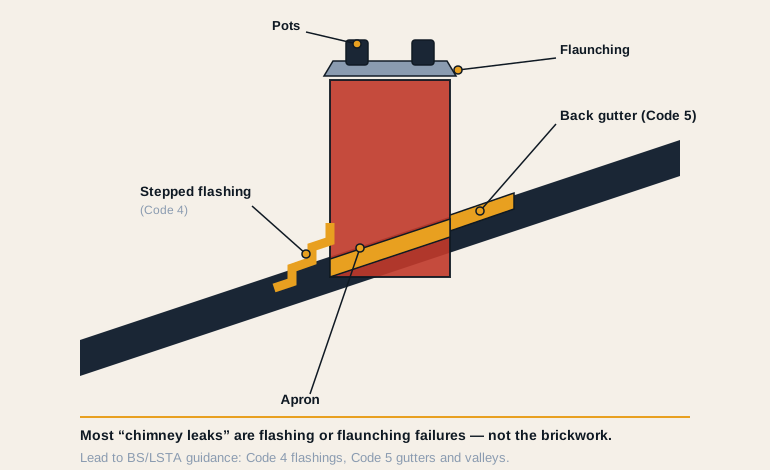
Get a Quote →The junction where the stack meets the roof is a top leak point. We renew stepped and apron flashings in code 4 lead as part of chimney work. Priced with the wider job.
Get a Quote →Redundant chimneys capped to keep them weathertight while retaining ventilation. £200–£600 depending on whether the stack is retained or reduced.
Get a Quote →Listed and conservation-area chimneys in Montpellier, Lansdown and Pittville repointed in matched lime mortar to satisfy conservation requirements. Specialist work, priced per stack.
Get a Quote →Free chimney survey and written quote across Cheltenham. No call-out fee.
Repointing renews the mortar joints in a chimney stack. On Cheltenham's exposed period stacks, failed pointing is both a leak risk and the first step toward loose, dangerous brickwork — but it's only worth doing if the bricks themselves are still sound.
When it is not the answer: If the brickwork is spalling and the stack is structurally unsound, repointing alone is a waste — that needs a partial or full rebuild. And a redundant stack in poor condition is often better removed and capped than repointed. Read the full guide.
The chimney stack is the most exposed masonry on any house, and on Cheltenham's tall Regency and Victorian properties it takes the full force of the prevailing south-westerly weather rolling in off the Severn Vale. Decades of wind-driven rain and freeze-thaw cycles erode the mortar joints, and once the pointing has gone, water tracks down inside the stack and appears as damp staining on chimney breasts in the bedrooms below — a very common call on the town's period stock.
The mortar itself is the key to a lasting repair on Cheltenham's older chimneys. Regency and Victorian stacks were built with soft lime mortar, and repointing them with hard modern cement traps moisture in the soft handmade bricks, causing the brick faces to spall and crumble — worse than the original problem. On these stacks, and mandatory in the conservation areas, we repoint in matched lime mortar that lets the brickwork breathe as it was designed to.
Flaunching failure is the other classic Cheltenham chimney fault. The flaunching is the sloped mortar bed at the top of the stack that holds the pots and sheds water. It cracks with age, water gets in, and the top few courses of brick start to fail. Renewing the flaunching early — a £150–£400 job — prevents the far more expensive rebuild of a stack top that's been allowed to deteriorate.
On the post-war estates and inter-war semis of Warden Hill, Up Hatherley and Hester's Way, many chimneys are now redundant since central heating replaced open fires. These are often best capped off — kept weathertight but ventilated — rather than repeatedly repaired. We advise honestly on whether a stack is worth retaining, reducing or capping based on its condition and whether you'll ever use the flue.
The NFRC and Building Regulations Approved Document J require that a capped or worked chimney retains adequate ventilation to prevent condensation and damp within a redundant flue. Simply sealing a chimney without ventilation traps moisture — correct capping always includes a ventilated cap or airbrick.
If your property is in one of Cheltenham's conservation areas — and much of Montpellier, Lansdown, Pittville, the Park and central Cheltenham is — chimney repointing should be carried out in lime mortar to match the original, both to satisfy conservation requirements and to protect the soft historic brickwork. We use the correct lime mix and joint finish for the period, so the repointed stack looks right and performs as the builders intended. Getting this wrong is a common and costly mistake on Cheltenham's period homes.
Guide prices per stack. Access and scaffold requirements are itemised in your written quote.
Rake out and repoint per stack. Lime mortar on conservation-area and period chimneys.
Hack off and renew the mortar bed holding the pots. Prevents stack-top deterioration.
Fit or replace pots and cowls to stop rain, downdraught and nesting. Per item.
Cap redundant stacks weathertight while retaining ventilation. Retain or reduce.
We inspect the stack close up to confirm the bricks are sound and repointing is the right call, and check the flaunching, pots and flashing while we're up there.
A fixed price for raking out and repointing in the correct mortar — lime mortar on Cheltenham's conservation-area and period stacks for breathability and compatibility.
Repointing needs safe standing time at the stack, so scaffold or a platform is arranged, with any permit, and a dry weather window chosen.
We rake the failed joints back to a sound depth, brush out, and repoint in matched lime or cement mortar with a weather-struck finish, renewing the flaunching if it's gone too.
Scaffold struck, debris cleared, and the finished stack checked before we hand over the guarantee.
| Job | Typical duration |
|---|---|
| Repoint a single stack | 1–2 days |
| Repoint + new flaunching | 1–2 days |
| Repoint tall/shared terrace stack | 2–3 days |
| With flashing renewal | +half to 1 day |
Fresh mortar needs dry, above-freezing weather to cure, so we won't repoint a stack in hard frost or persistent rain — it would fail within a season.
Repointing is at the highest point of the roof and always needs scaffold or a proper platform — there's no safe ladder-only way to point a stack well. Scaffold is specified for: every repointing job, given the height and the standing time the work needs - always itemised in your written quote, never a hidden extra, and we arrange it.
Cheltenham's Regency terraces in Montpellier and Lansdown have railings, lightwells and shared party walls that limit rear access, so pavement scaffold and skip space usually need a permit. Pavement scaffold and skip permits go through Cheltenham Borough Council; allow a few working days on streets like Montpellier Street, the Suffolks, the terraces off St Paul's Road where space is tight.
| Job | Typical range | Notes |
|---|---|---|
| Repoint a single stack | £350–£700 | Lime mortar on period stacks |
| Repoint + new flaunching | £450–£900 | Per stack |
| Tall/shared terrace stack | £600–£1,200 | More scaffold, more height |
| Repoint + flashing renewal | £700–£1,400 | Common combined job |
| Scaffold (where separate) | £300–£800 | Itemised in the quote |
Worked example: Raking out and repointing a single weathered Victorian stack in Pittville in lime mortar, with a new flaunching and tower access: around £620.
Repointing is invoiced on completion, or in two stages on larger multi-stack terraces; nothing is paid before materials and scaffold are on site.
Repointing carries a written 10-year workmanship guarantee; correctly specified lime mortar on a period stack will typically outlast that by decades before it needs attention again.
If a fault appears in covered work, we come back and put it right. No quibbling, no re-charge.
Repointing means scaffold at roof level for a day or two and some mortar dust and debris; your fireplace and flue are unaffected and you needn't be home. You do not need to stay home for external work - we just need power and access agreed in advance.
We point in dry, mild conditions and protect fresh mortar from rain while it cures; lime mortar in particular needs gentle, frost-free drying. Cheltenham's sheltered vale position brings damp Cotswold-edge autumns and heavy leaf fall from the town's many mature trees, which keeps north-facing slopes slow to dry.
"Damp patch on the bedroom chimney breast of our Pittville villa. They repointed the stack in lime mortar to match, renewed the flaunching and lead. Damp gone, and the conservation officer was happy."
"Our Lansdown stack had been repointed in cement by someone years ago and the bricks were crumbling. They redid it properly in lime — explained exactly why the cement had caused the damage."
"Capped off two redundant chimneys on our Up Hatherley semi that we'll never use. Left ventilation in so no condensation. Tidy job, fair price, no upsell."
Chimney repointing costs £300–£800 per stack depending on height, access and scaffold. Flaunching renewal is £150–£400, cowl or pot fitting £120–£300, and capping £200–£600. Conservation-area stacks repointed in lime mortar sit at the upper end. All quotes are free and work carries a 10-year guarantee.
When the mortar joints erode, wind-driven rain tracks down inside the stack and appears as damp staining on chimney breasts in the rooms below. This is very common on Cheltenham's tall, exposed period chimneys. Repointing, renewing the flaunching and the lead flashing usually cures it.
Lime, on Cheltenham's Regency and Victorian stacks. They were built with soft lime mortar and handmade bricks; hard cement traps moisture and causes the brick faces to spall and crumble. In the conservation areas lime is also required. We use the correct lime mix and joint finish for the period.
Flaunching is the sloped mortar bed at the top of the stack that holds the chimney pots and sheds water. It cracks with age, letting water into the stack top and causing the upper brick courses to fail. Renewing it at £150–£400 prevents a far more expensive stack rebuild later.
Yes. Many chimneys on Cheltenham's inter-war and post-war homes are redundant. We cap them to keep them weathertight while retaining ventilation, which prevents condensation in the redundant flue. We advise honestly on whether to retain, reduce or fully cap the stack.
Yes. We fit cowls to stop rain ingress, cure downdraught and prevent birds nesting in the pots — a common problem in Cheltenham's leafier areas. Cowls are fitted from scaffold or tower depending on the stack, at £120–£300 per item.
Yes. All chimney repointing, flaunching, flashing and capping carries a 10-year written workmanship guarantee. We are NFRC-registered and fully insured, and we use lime mortar correctly on period and conservation-area stacks so the repair lasts.
Chimney work often goes hand in hand with flashing and roof repairs. Here's where to go next.
Free chimney survey and written quote across Cheltenham. Lime mortar for conservation areas, 10-year guarantee.
0124 235 2251